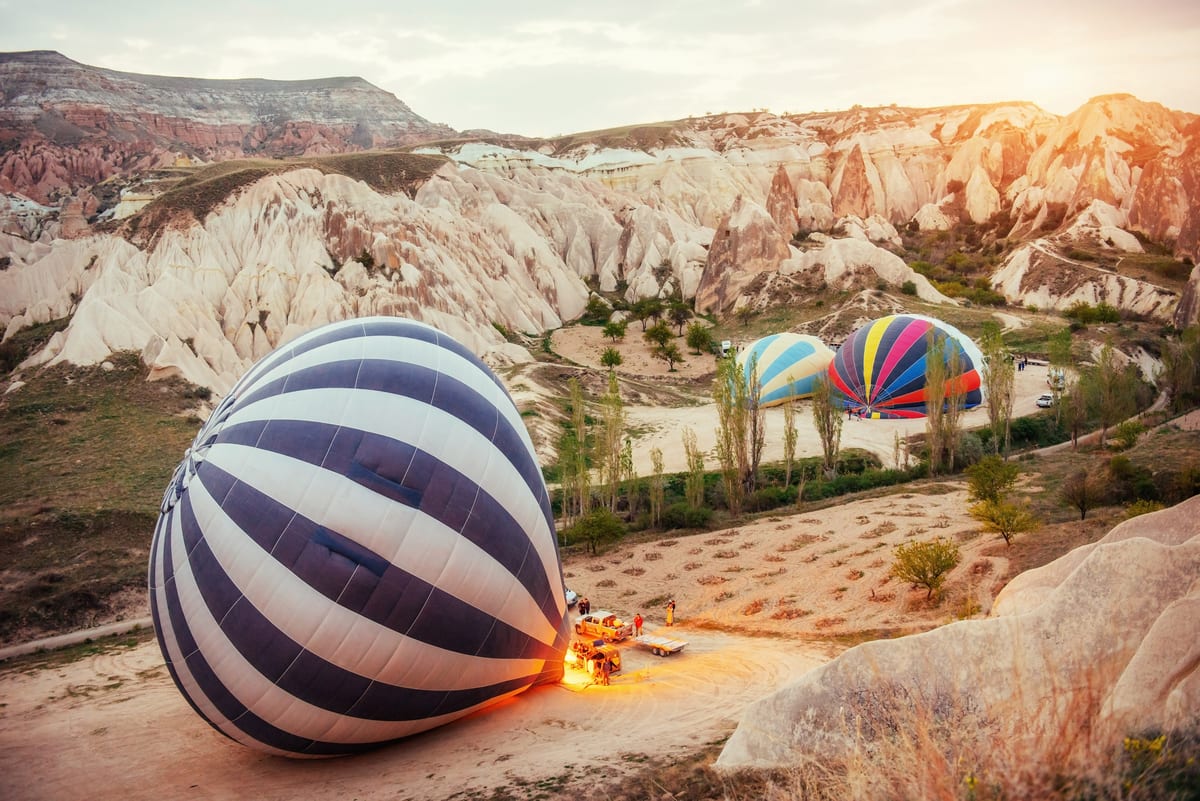
Cappadocia Balloon Weather Cancellations: How the Decision Works
A meaningful share of Cappadocia balloon mornings are grounded by weather every year—far more in winter than in summer. We looked for an official, publicly audited monthly cancellation-rate dataset for Cappadocia ballooning (from SHGM, MGM, or any other government source) to cite here, and found none. Above Cappadocia is a booking agency, not a single operator, and does not maintain its own audited flight-by-flight statistics across every licensed operator in the region either. Rather than publish invented percentages dressed up as data, this page explains how the daily decision actually works and gives seasonal planning guidance without pretending to be measured statistics.
Whatever the season, the flight is authorised or grounded fresh each morning based on that day's actual conditions—no forecast, seasonal pattern, or table can guarantee in advance whether a specific morning will fly. Understanding how the decision works and scheduling enough backup mornings still gives you a genuine advantage.
Key Takeaway
Summer cancellations are relatively rare. Winter is meaningfully harder, with wind, fog, and snow grounding flights far more often. The sweet spot is April–May and September–October, with noticeably fewer cancellations than winter and far fewer crowds than peak summer. These are general seasonal patterns, not measured rates—book the first morning of your stay so you keep backup mornings in hand.
Who Decides Whether Flights Go Ahead?
Cappadocia's SHM system publishes a flight status every morning. There is no fixed publication time—it can be confirmed the evening before, in the early hours before pickup, or at the last minute, depending on conditions. SHM Kapadokya posts one of three statuses at shmkapadokya.kapadokya.edu.tr: Green (meteorologically available, though the final decision still rests with the licensed operator and pilot), Yellow (takeoff clearance temporarily withheld, which may shift to Green or Red), or Red (flight cancelled for that period). Above Cappadocia does not set this status or decide whether a flight goes ahead—we coordinate with whichever licensed operator is assigned to your flight. The status is informed by real-time weather data: surface wind speed, wind aloft at multiple altitudes, visibility, cloud base height, and precipitation. If any single parameter exceeds the threshold, flights do not launch.
Some mornings the sky looks perfectly clear from the ground, yet upper-altitude wind data shows gusts above the safe limit. On other, overcast-looking mornings, flights proceed because the wind is calm and visibility is adequate. SHM's flight-status decisions are data-driven, not based on appearances. For more on how this system works, read our safety regulations guide.
The Three Main Causes of Cancellation
1. Wind
Wind is widely considered the most common reason for cancellations. When surface or upper-altitude wind exceeds the safe threshold for a given morning, controlled flight is not possible. Cappadocia sits on a high plateau at about 1,000 metres elevation, which means it is exposed to continental weather systems that can bring sudden wind shifts, especially in winter and early spring.
2. Low Visibility
Fog, heavy rain, and snow reduce visibility below safe minimums. This happens most frequently between November and February, when cold valley air traps moisture at low altitude. Dense fog can form overnight in the Göreme valley even when the weather forecast shows clear skies. Morning fog typically burns off by 8–9 AM, but by then the flight window has passed.
3. Precipitation
Rain and snow ground all flights. Even light drizzle is a cancellation trigger because water on the envelope fabric changes its weight and thermal properties unpredictably. Cappadocia receives most of its precipitation between December and April, with January and February being the wettest months.
Typical Weather, Month by Month
No official, audited monthly cancellation-rate dataset for Cappadocia ballooning is publicly published, so rather than attach a risk label or percentage to each month, the table below simply describes the region's well-documented seasonal climate pattern (dry, calm summers; windier, wetter, snowier winters). It is general climate information, not a measured cancellation statistic, and not a guarantee for any specific morning.
| Month | Avg Temp (AM) | Typical Weather Factor |
|---|---|---|
| January | -5 to 0°C | Wind, snow, fog |
| February | -3 to 2°C | Wind, snow |
| March | 0 to 8°C | Wind, rain |
| April | 5 to 12°C | Occasional wind |
| May | 9 to 16°C | Rare wind |
| June | 13 to 20°C | Very rare |
| July | 16 to 22°C | Very rare |
| August | 16 to 22°C | Very rare |
| September | 12 to 19°C | Rare wind |
| October | 6 to 14°C | Autumn wind |
| November | 0 to 8°C | Wind, early snow |
| December | -2 to 3°C | Wind, snow, fog |
Whichever month you fly in, the actual go/no-go call is always made fresh on the morning itself—book the first morning of your stay so you keep as many backup mornings as possible if the weather does not cooperate.
How to Plan Around Cancellations
Our recommendation: book your flight for your first morning in Cappadocia. If it gets cancelled, you have subsequent mornings as backup. Waiting until your last day creates unnecessary stress and removes your safety net.
How Many Mornings to Budget
- •June–August: Weather-related cancellations are less common in this window, so a single morning is often enough—though booking it as your first morning still preserves a backup if that particular day does not cooperate.
- •April–May, September–October: Weather is generally more variable than summer. Plan on two mornings in Cappadocia so you have a genuine backup if the first is grounded.
- •November–March: This is when wind, fog, and snow disrupt flying most often. Plan on three mornings minimum, and book your flight for the first morning of your stay to preserve as many backup attempts as possible.
Cancellations Can Cluster in Runs
This is a point many travellers miss. Cancellations are not spread evenly across a month. Weather systems tend to move in blocks: a single winter storm system can ground flights for several consecutive mornings, while a summer cancellation is far more likely to be an isolated morning. There is no published data on exactly how long these runs typically last, so plan your trip with the possibility of a multi-day run in mind rather than assuming any fixed number of days.
Insider Tip
Mid-week mornings (Tuesday, Wednesday, Thursday) can sometimes have slightly fewer balloons in the sky, since weekend tourism tends to drive Monday and Friday bookings higher. Fewer balloons may mean less air-traffic congestion and, in some cases, a bit more flexibility in your pilot's route. This is anecdotal rather than published data, but the weather does not care what day it is — a Tuesday booking simply might work out slightly differently.
What Happens When Your Flight Is Cancelled
There is no fixed time—the status can be confirmed the evening before, in the early hours before pickup, or at the last minute, depending on conditions. We send a WhatsApp message as soon as the SHM status comes through. Your options:
- •Rebook: You can request a new date. This is not automatic or free—it is a new booking at that day's current price and availability, and no slot is guaranteed. This is the most common choice.
- •Refund: If you cannot stay for a rebooked flight, your booking is refunded. A card-processing fee applies to card refunds; cash and bank-transfer refunds have no deduction.
For complete details, see our weather and cancellation policy. And if your flight does get cancelled, we have a list of 12 alternative things to do in Cappadocia so your day is not wasted.
Cappadocia Weather: What Makes This Region Unique
Cappadocia sits on the Central Anatolian Plateau at roughly 1,000 metres above sea level. The region has a continental semi-arid climate: hot, dry summers and cold, snowy winters. This creates a wide seasonal range that directly affects ballooning conditions.
- •Summer (June–August): Morning temperatures of 15–22°C with minimal wind. The high-pressure system that dominates the Mediterranean keeps conditions stable, and these are the driest months of the year in the region.
- •Autumn (September–November): A transition period. September is still dry and warm. By November, Atlantic weather fronts begin reaching central Turkey, bringing wind and occasional early snow.
- •Winter (December–February): The coldest period, with morning temperatures often below freezing and regular snowfall, though distribution is uneven. Some weeks are crisp and clear; others are blanketed by storm systems.
- •Spring (March–May): Warming temperatures and decreasing wind frequency. By May, conditions closely mirror early summer. March can still produce late snowfall.
Year-on-Year Trends
Individual years vary—a milder winter means more flyable mornings, a stormy one means fewer—but we don't track or publish a precise year-by-year count, since that would require audited data across every operator in the region that Above Cappadocia does not have access to.
What has generally improved is the precision of weather forecasting. Modern radar and upper-atmosphere wind profiling give pilots and aviation officials better data than in the past, which supports fewer last-minute cancellations after passengers have already arrived at the field—the decision is usually made before pickup, though on borderline mornings it can come later.
Frequently Asked Questions
Can I check the cancellation status before waking up?
The operator sends the status via WhatsApp as soon as the decision is made—timing is not fixed and varies morning to morning. A practical strategy: keep your phone within reach as you get ready, and check for a message before you head down for pickup; if a cancellation message comes through, you can go back to sleep.
Do some operators fly when others do not?
No. When SHM issues a Red status, every operator is grounded together for that period. On Green, the flight is meteorologically available, but the final call still rests with each assigned operator and pilot. No company has the authority to override a Red status. If someone claims to fly on a Red day, avoid them.
Is there a time of year with zero cancellations?
No. Even July and August, the calmest months of the year, see the occasional grounded morning—there is no month where flying is guaranteed. Summer cancellations are rare enough that a single backup morning is generally sufficient for many travellers, but nothing removes the possibility entirely.
Should I buy travel insurance for balloon cancellations?
We always recommend travel insurance that covers activity cancellations. While we refund your booking if weather cancels your flight (a card-processing fee applies to card refunds only), insurance can also cover additional accommodation costs if you extend your stay to wait for a flyable morning, or the cost difference if you choose to rebook at a different day's price. This is especially relevant for winter travellers.
For month-by-month travel recommendations, read our best time to fly guide. Ready to pick your dates? Check current pricing and secure your spot.
Related Articles
September in Cappadocia: The Secret Best Month for Balloon Flights
Why September is the best month for a Cappadocia balloon ride. Perfect autumn weather, fewer tourists, high flight success rates, grape harvest season, and stunning photography light.

Spring in Cappadocia: Why April Is the Best Month to Fly a Balloon
Discover why April is the ideal month for a Cappadocia balloon ride. Spring weather, wildflowers, fewer crowds, lower prices, and golden sunrise light make April perfect.
Cappadocia Balloon Ride from Istanbul: Can You Do It as a Day Trip?
Cappadocia balloon ride from Istanbul as a day trip: flight schedules, costs from EUR 150, hour-by-hour plan, and whether one day is enough. Book with Above Cappadocia.
Ready to Fly?
Book your sunrise flight and we handle the rest—including a refund if weather grounds us. From EUR 150.
Book Your Balloon Flight