Cappadocia Balloon Flight Route: Valleys & Scenery Guide
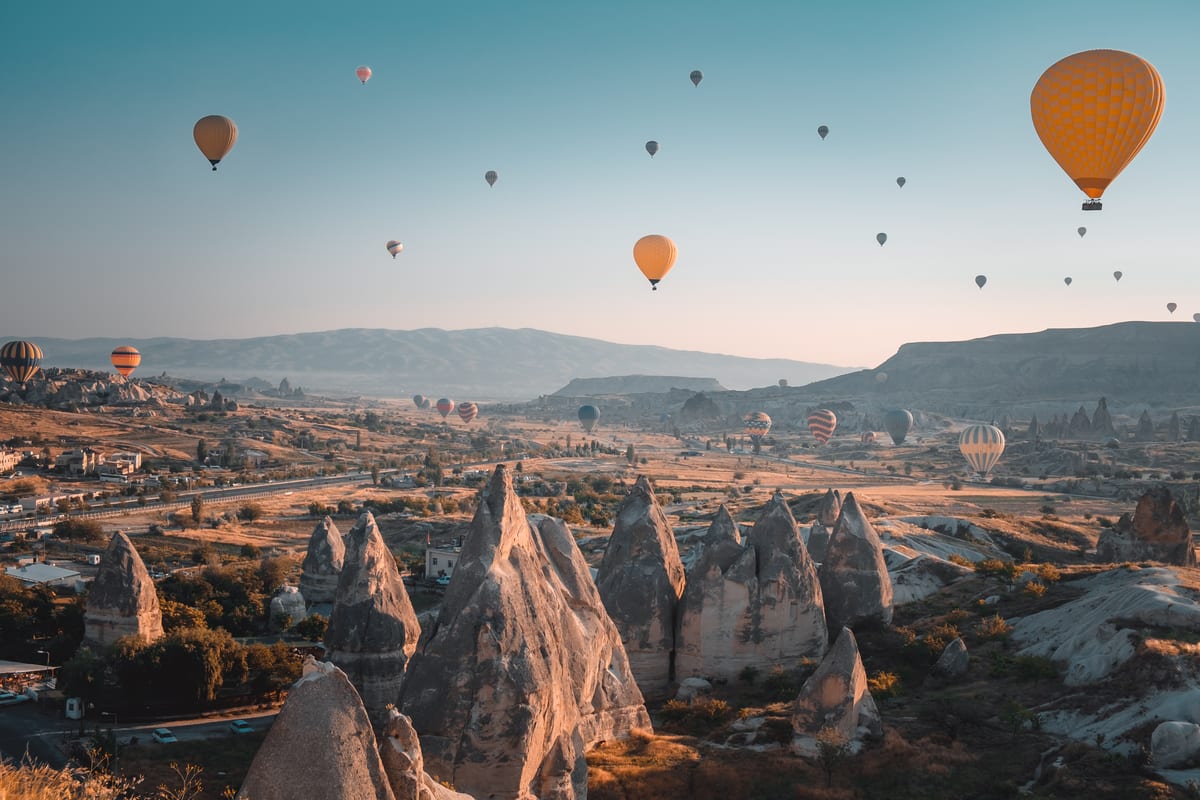
On many flights, the pilot brings the balloon low enough at some point to skim the treetops inside one of the valleys, wind permitting—often Rose Valley, though the exact route depends on the morning's conditions. The rock walls glow pink and orange in the early light, and other balloons are often visible floating through the same canyon. Below, you can sometimes make out a hiking trail you might walk later that day. This is often the moment passengers reach for their phone—and then put it down, because no screen does it justice.
No two Cappadocia balloon flights follow the exact same path. Wind direction and speed on any given morning determine which valleys the pilot can reach. But the general geography means most flights pass over a similar set of landmarks, and knowing what you are looking at makes the experience far richer.
Key Takeaway
Most flights cover 3–5 of Cappadocia's major valleys in a single morning. The pilot reads wind layers at different altitudes to steer between them, spending time at low altitude inside the canyons whenever conditions allow.
How Flight Routes Are Decided
Balloons have no engine and no rudder. The pilot's only directional tool is altitude: ascending to catch one wind layer, descending to catch another. Before each flight, pilots assess wind conditions at multiple altitudes to work out which valleys the balloon can realistically reach that morning.
As an illustrative example, a calm morning with light southwesterly winds might see flights drift from the fields north of Göreme toward Rose Valley, then Pigeon Valley and Uchisar Castle, while a morning with northerly winds might favour Love Valley and Devrent Valley instead. The actual route on any given morning is decided by the pilot based on that day's wind conditions, and can vary between operators and flights.
Valley-by-Valley Guide
Love Valley (Aşk Vadisi)
The most photographed valley from balloon altitude. Love Valley is famous for its tall, pillar-like fairy chimneys that rise 30–40 metres from the valley floor. From above, they look like a forest of stone columns. The valley runs roughly north-south, and pilots often descend low enough for passengers to see the texture of the rock up close. Early morning light catches the eastern face of these columns and creates long shadows that make for dramatic photographs.
Rose Valley (Güllüdere Vadisi)
Named for the pink-toned rock that dominates its walls, Rose Valley is one of the most scenic stretches you will fly over. The valley is wider than Love Valley, with carved cave churches dotting the cliff faces. At sunrise, the iron-oxide-rich rock shifts from soft pink to deep rose to orange within minutes. Photographers, take note: the light here can shift quickly, so shoot continuously during the pass.
Red Valley (Kızılçukur Vadisi)
Adjacent to Rose Valley but with deeper red and ochre tones. The rock here is layered volcanic tuff in shades ranging from cream to deep rust. Red Valley contains some of Cappadocia's oldest cave churches, including the Kolonlu Kilise (Columned Church) with frescoes dating to the 8th century. From the basket, you can spot the dark openings of these cave dwellings carved into the cliff walls.
Pigeon Valley (Güvercinlik Vadisi)
Stretching between Göreme and Uchisar, Pigeon Valley gets its name from the thousands of pigeon houses carved into the rock faces. Local farmers carved these niches centuries ago to collect pigeon droppings as fertiliser for their vineyards. From the air, the cliff faces look perforated with small rectangular openings. On one end of the valley, Uchisar Castle—the highest point in Cappadocia—rises above the surrounding terrain, making it a natural landmark for orientation during flight.
Devrent Valley (Imagination Valley)
The weirdest landscape in Cappadocia. Devrent Valley is covered in mushroom-shaped fairy chimneys and rock formations that look like animals, faces, and abstract sculptures. There are no cave churches here—the rock was too soft for habitation—but the geological shapes are extraordinary. One formation famously resembles a camel, another a seal. From balloon altitude, the valley looks like a surrealist sculpture garden spread across a hillside.
Sword Valley (Kılıçlar Vadisi) and White Valley (Bağlıdere)
These smaller valleys are reachable when wind conditions cooperate. Sword Valley features narrow, blade-like rock formations, while White Valley is named for its pale, cream-coloured tuff that glows almost silver in early light. Both are less visited by ground hikers, so seeing them from the air gives you a perspective that few travellers experience.
| Valley | Key Feature | Best For | Typical Altitude Feel |
|---|---|---|---|
| Love Valley | Tall pillar fairy chimneys | Photography, iconic shots | Low |
| Rose Valley | Pink-toned rock, cave churches | Sunrise colour, history | Low–Medium |
| Red Valley | Ochre layers, ancient frescoes | Geology, warm-tone photos | Medium |
| Pigeon Valley | Carved pigeon houses, Uchisar Castle | Panoramic views, landmarks | Medium–High |
| Devrent Valley | Mushroom-shaped formations | Unique geology, fun shapes | Low–Medium |
What the Flight Looks Like Minute by Minute
On a typical Sunrise Balloon Flight, a flight might look something like this: the first few minutes are typically spent climbing to open altitude, where you see the full panorama—dozens of balloons, the Göreme skyline, and the valley network stretching in every direction—before the pilot begins descending toward the first valley, and the scenery shifts from panoramic to intimate.
The middle portion of the flight is typically spent weaving between valleys at varying altitudes—dropping low inside a canyon, then climbing for a wide view before descending into the next valley. The exact altitudes and timing vary by morning and by pilot.
The final minutes of the flight involve positioning for landing. The pilot communicates with the ground crew by radio, and the chase vehicle moves to the projected landing zone. The approach is gradual and gentle—the touchdown itself is often barely noticeable.
For a detailed minute-by-minute breakdown of the entire morning, read our what to expect guide.
Tips for Getting the Best Views
- •Choose a corner position: Corners of the basket give you 180-degree views without other passengers blocking your line of sight. Board early and head for a corner.
- •Enjoy the valley dips: The pilot spends time at low altitude inside the canyons whenever conditions allow, which is where the scenery is most dramatic.
- •Look in all directions: Many passengers fixate on the view directly ahead. Turn around regularly—the other balloons behind you are part of the scenery too.
- •Ask your pilot: Ask your pilot to point out specific landmarks, hidden cave churches, or the best angle for your next photo.
Frequently Asked Questions
Can I request a specific valley?
You can discuss route preferences with your pilot before takeoff, and they will do their best to accommodate you, but wind conditions always have the final say on that morning's route.
Do all flights pass over the same valleys?
Most flights cover at least two or three of the main valleys (Love, Rose, Pigeon), but the exact combination depends on wind direction. That is part of what makes each flight unique. If you fly twice on consecutive mornings with different wind conditions, you may see quite different scenery.
How many valleys does the flight cover?
Our approximately 60-minute Sunrise Balloon Flight typically covers 3–5 major valleys, with the pilot weaving between them at varying altitudes based on that morning's wind conditions. For everything included, see the flight details.
How low do balloons fly inside the valleys?
Experienced pilots can bring the balloon very low over the valley floor or treetops, wind and conditions permitting. At this altitude, you can see details on the rock face—carved pigeon houses, hiking paths, even wildflowers in spring. These low passes are among the most memorable moments of any flight.
Related Articles
How Hot Air Balloons Work + Cappadocia Ballooning History
The science behind hot air balloon flight, 30+ years of Cappadocia ballooning history, and why this region became the world's top balloon destination.
How Long Is a Cappadocia Balloon Flight? Full Timeline
How long does a Cappadocia balloon flight last? Full morning timeline from early hotel pickup (timing varies by season) to hotel drop-off, plus tips to make the most of your time in the air.
Sunrise vs Sunset Balloon Rides in Cappadocia: Which Should You Choose?
Compare sunrise and sunset balloon rides in Cappadocia. Why sunrise flights dominate, what makes them special, and photography tips for the golden hour.
Ready to See These Valleys from Above?
Sunrise flights from EUR 150 per person. Hotel pick-up, a light snack with hot and cold drinks, and champagne included.
Book Your Balloon Flight