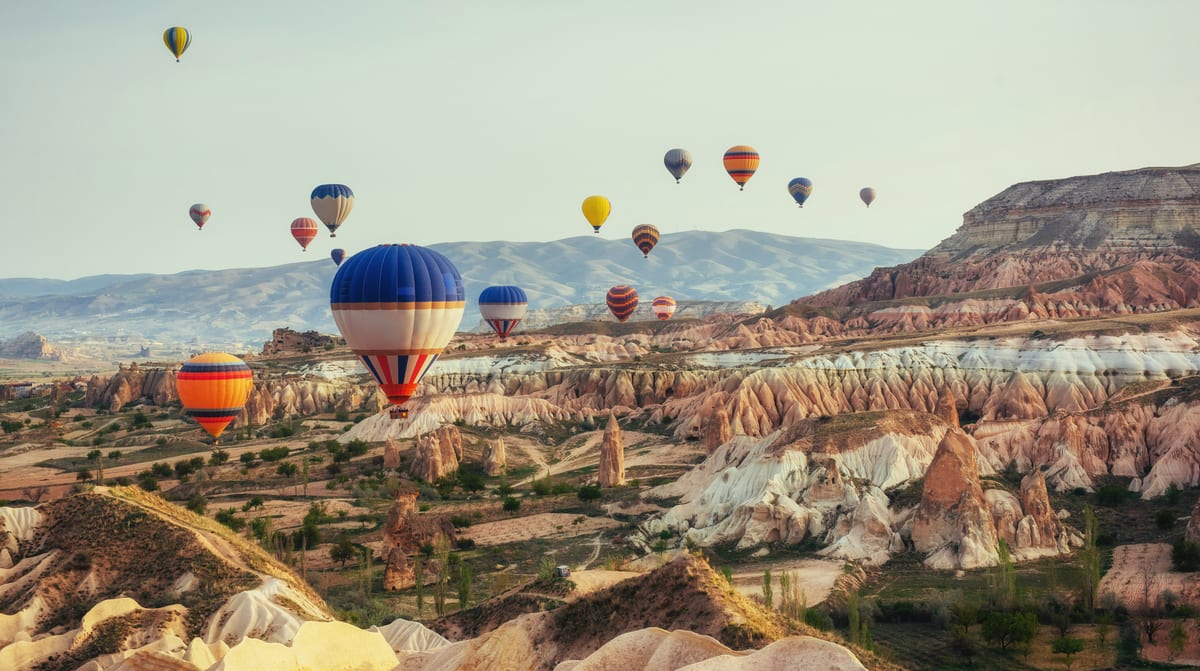
Cappadocia Balloon Rides: Accessibility & Health Requirements
“Can I actually do this?” It is a common question from travelers with health concerns, mobility challenges, or disabilities. We want to give you honest, specific answers—not vague reassurances—so you can make the right decision for your body and your trip.
Hot air balloon flights in Cappadocia are often gentler than people expect. There is little to no turbulence, no real sense of speed, and no freefall sensation. The basket stands still on the ground, you step in, and it lifts straight up. At altitude, you are essentially standing on a stable platform that drifts slowly with the wind. The physical demands are real but specific, and most of them involve getting in and out of the basket.
The Physical Requirements: What Your Body Actually Needs to Do
Here is a precise breakdown of the physical actions during a balloon flight:
- Step over a basket wall: The basket wall is approximately 110–120 cm (about 3.5–4 feet) high. You climb in using footholds cut into the wicker. Some baskets have a small door.
- Stand during the flight: There are no seats inside the basket. Standing tolerance and whether support is needed are confirmed with the assigned operator before booking; you lean against the basket wall or hold the rope handles.
- Absorb a landing impact: Landings are usually gentle, but occasionally the basket tips or bumps. The pilot instructs everyone to bend their knees and hold the rope handles. The force is similar to stepping off a low curb—in normal conditions.
- Walk on uneven ground: The launch and landing sites are open fields. The terrain can be dusty, uneven, or slightly muddy depending on season.
Mobility Challenges and Wheelchair Users
We want to be straightforward: standard balloon baskets are not wheelchair accessible. The basket entry requires climbing over or through a narrow opening, and there is no seating inside. Whether standing with support (rather than fully unsupported) is workable for a given passenger is confirmed with the assigned operator before booking.
If you can stand with support and climb a few steps with assistance, a flight may still be possible. Here is what we can do:
- The crew can assist you into the basket with hands-on support
- We can position you in a corner of the basket where you can lean against two walls for stability
- We ask that you bring a companion who can assist you during the flight
If you have mobility concerns, contact us directly at WhatsApp or email before booking. We will discuss your specific situation and tell you honestly whether we can accommodate you safely.
Heart Conditions and Cardiovascular Health
Balloon flights in Cappadocia reach altitudes of 200–600 meters above ground level (roughly 1,200–1,600 meters above sea level, since Cappadocia itself sits at about 1,000 meters elevation). The air pressure change at these altitudes is minimal and comparable to driving through hilly terrain.
That said, if you have any of the following conditions, we strongly recommend consulting your doctor before booking:
- Recent heart surgery or cardiac event (within the last 6 months)
- Unstable angina or uncontrolled heart arrhythmia
- Severe hypertension (uncontrolled high blood pressure)
- Recent stroke or TIA
- A pacemaker or defibrillator—please consult your cardiologist before booking, since the early wake-up and excitement can elevate heart rate
Passengers with managed heart conditions do fly balloon flights. The flight is calm, the air is cool, and the physical exertion is low. But the early-morning pickup, the excitement, and the cold temperatures at altitude (especially in spring and autumn) are factors your doctor should weigh.
Respiratory Conditions: Asthma, COPD, and Altitude
The altitude reached during a Cappadocia balloon flight (1,200–1,600 meters above sea level) is low, and the pressure change involved is minimal—well short of the altitudes where breathing difficulty is typically a concern. The air quality at sunrise in Cappadocia is excellent—dry, clean, and cool.
If you have asthma, bring your inhaler in your pocket. The burner produces a brief blast of heat and a small amount of combustion gas, but the open-air basket means the fumes dissipate instantly. Cold morning air (especially October through April) can trigger asthma for some people—a scarf over your mouth helps.
For COPD or other chronic lung conditions, consult your doctor. The standing requirement and the cold air are the main factors to discuss.
Weight Limits
Balloon operators in Cappadocia manage total basket weight, not individual passenger weight. Each basket has a certified maximum payload, and the pilot calculates the total weight of all passengers plus fuel and equipment before each flight.
In practice, this means there is no strict per-person weight limit posted. However, if you weigh over 120 kg (265 lbs), please let us know at booking so we can ensure proper weight distribution in the basket. This is a safety and balance consideration, not a restriction.
Age Restrictions
Minimum age: 6 years old. Children under 6 years old are not accepted on the flight. Children aged 6–12 usually require adult accompaniment; other requirements (such as height) vary by operator and are confirmed with your quote. For detailed family advice, see our family guide to balloon rides.
No strict maximum age. Age alone is not a disqualifier—physical ability is. If you can stand for the flight and climb into the basket, you can generally fly. Boarding assistance and basket positioning for passengers who need extra support vary by operator and are confirmed with the assigned operator before booking.
Pregnancy
Most balloon operators in Cappadocia, including us, do not recommend flights for pregnant travelers. The reasons are precautionary:
- Landings can involve sudden jolts or basket tipping
- Standing without seating may be uncomfortable
- The early morning pickup timing—which varies by season and is confirmed the evening before—and cold temperatures add physical stress
- Medical facilities in Goreme are limited—the nearest hospital is in Nevsehir (roughly 20 minutes away, depending on location and traffic)
We ask pregnant travelers to provide a doctor's clearance letter if they wish to fly. For more detail, see our guide for pregnant, elderly, and child passengers.
Fear of Heights and Anxiety
A balloon basket does not trigger vertigo the way a cliff edge or a glass floor does. There is no sense of falling. The basket walls come up to chest height, the ascent is gradual, and there is no swaying or rocking. Passengers who describe themselves as “terrified of heights” often find they feel calmer than expected once airborne.
We have a full article on this topic: fear of heights and balloon rides.
Diabetes
The early-morning pickup and the pre-flight snack timing can disrupt your usual routine. A light snack with hot and cold drinks is served before the flight—not a full breakfast—so if you need to manage blood sugar carefully, bring your own snacks, glucose tablets, and medication. Let your pilot and crew know about your condition before boarding. As with any change to your normal schedule, meals, or activity level, we recommend discussing how the early start and the flight itself may affect your blood sugar with your doctor before booking.
Back and Joint Problems
Standing without seating is the main concern for passengers with back or joint issues. There are no seats, and the basket floor is firm wicker. Wear supportive shoes (not sandals or heels). If you have a recent back injury or severe joint problems, the landing impact—even though usually gentle—could cause discomfort.
Our flight is designed to balance a full experience with passenger comfort. The crew can position you where you have room to shift your weight and lean comfortably.
Motion Sickness
Good news: motion sickness during a balloon flight is uncommon. The balloon moves with the wind, not against it, so there is generally little to no turbulence, rocking, or sensation of motion. Many passengers feel like they are standing still while the world moves beneath them. If you get seasick on boats or carsick on winding roads, a balloon is a different experience.
Medical Emergencies During a Flight
The pilots carry a first aid kit and a radio for communication with the ground team. If a medical issue arises mid-flight, the pilot will land as soon as it is safely possible—Cappadocia's terrain offers many safe landing spots. From there, the crew coordinates with local emergency services. The nearest hospital is Nevsehir State Hospital, about 20 minutes from Goreme by road.
How to Prepare If You Have Health Concerns
- Tell us at booking: Mention any health condition or physical limitation when you book. We can prepare accordingly.
- Bring medication: Keep inhalers, glucose tablets, heart medication, or anything you might need in your pocket, not in a bag left in the van.
- Dress warmly: Cold stress worsens many conditions. Layer up, especially from October to April. See our what to wear guide.
- Eat before the flight: The pre-flight snack is light, not a full breakfast. If you need a specific meal timing, eat at your hotel first.
- Bring a companion: If you have a condition that could require assistance, flying with someone who knows your medical needs is strongly recommended.
- Get doctor clearance: If in doubt, ask your doctor. A simple note confirming fitness to fly is enough.
Quick Reference: Can I Fly?
| Condition | Can you fly? |
|---|---|
| Managed heart condition | Yes, with doctor clearance |
| Recent heart surgery (<6 months) | Not recommended |
| Asthma (controlled) | Yes, bring inhaler |
| Wheelchair user (cannot stand) | Not possible in standard baskets |
| Limited mobility (can stand with support) | Yes, with assistance from the crew |
| Pregnant | Doctor clearance required |
| Fear of heights | Yes—nervous flyers often feel calmer than expected once airborne |
| Under the minimum age (6) | No |
| Over 80 years old | Yes, if physically able to stand and climb into basket |
| Diabetes | Yes, manage timing and bring supplies |
| Back/joint problems | Yes, wear supportive shoes and mention it at booking |
| Motion sickness | Yes—motion sickness on balloon flights is uncommon |
Have a specific question about your condition? Message us on WhatsApp and we will give you an honest answer. For general flight questions, see our 30 most common balloon questions or our safety page.
Frequently Asked Questions
Do I need a doctor’s note to fly with a medical condition?
A doctor’s note is only required for pregnant travelers. For other conditions—heart disease, asthma, joint problems—we strongly recommend consulting your doctor beforehand, but a formal letter is not mandatory unless your condition is unstable or recently diagnosed.
Is there a maximum weight limit per passenger?
There is no strict per-person weight limit. Pilots manage total basket payload, not individual weight. If you weigh over 120 kg (265 lbs), let us know at booking so we can ensure proper weight distribution for safety and comfort.
Can someone with a knee replacement fly?
Yes, as long as you can climb into the basket using the footholds and stand for the flight. The crew will assist you with boarding, and specific support needs can be confirmed with the assigned operator before booking. Wear supportive, flat-soled shoes.
How far is the nearest hospital from the launch site?
Nevsehir State Hospital is approximately 20 minutes from Goreme by road. Response times for emergency services to a specific launch or landing area can vary depending on location and conditions. Pilots carry a first aid kit and a radio for ground communication at all times.
Related Articles
Cappadocia Balloon Weather Forecast & Fly Probability: The Complete Data Guide
Cappadocia balloon weather data: weather patterns by month, SHM flight-status process, wind limits, and how to maximize your fly probability. Plan smarter.
Cappadocia Balloon Rides in Winter: The Honest Guide to December, January, and February
Winter balloon flights in Cappadocia: snow-covered fairy chimneys, the most flight-disrupting weather of the year, -5 to 2 C. Honest guide to flying in December, January, February.

Cappadocia Balloon All-Inclusive Package: What You Get, What You Pay, and What to Watch Out For
What is really included in a Cappadocia balloon all-inclusive package? Transfer, a light snack, flight, champagne. Our flight starts from EUR 150 — what to check before you book a bundle.
Ready to Fly Over Cappadocia?
Sunrise balloon flights from EUR 150 per person. Hotel pick-up, a light snack, champagne toast, and flight certificate included. Tell us about any health concerns when you book—we will take care of the rest.
Book Your Balloon Flight