Cappadocia Balloon Safety: The Complete Guide to Regulations, Equipment & Risk
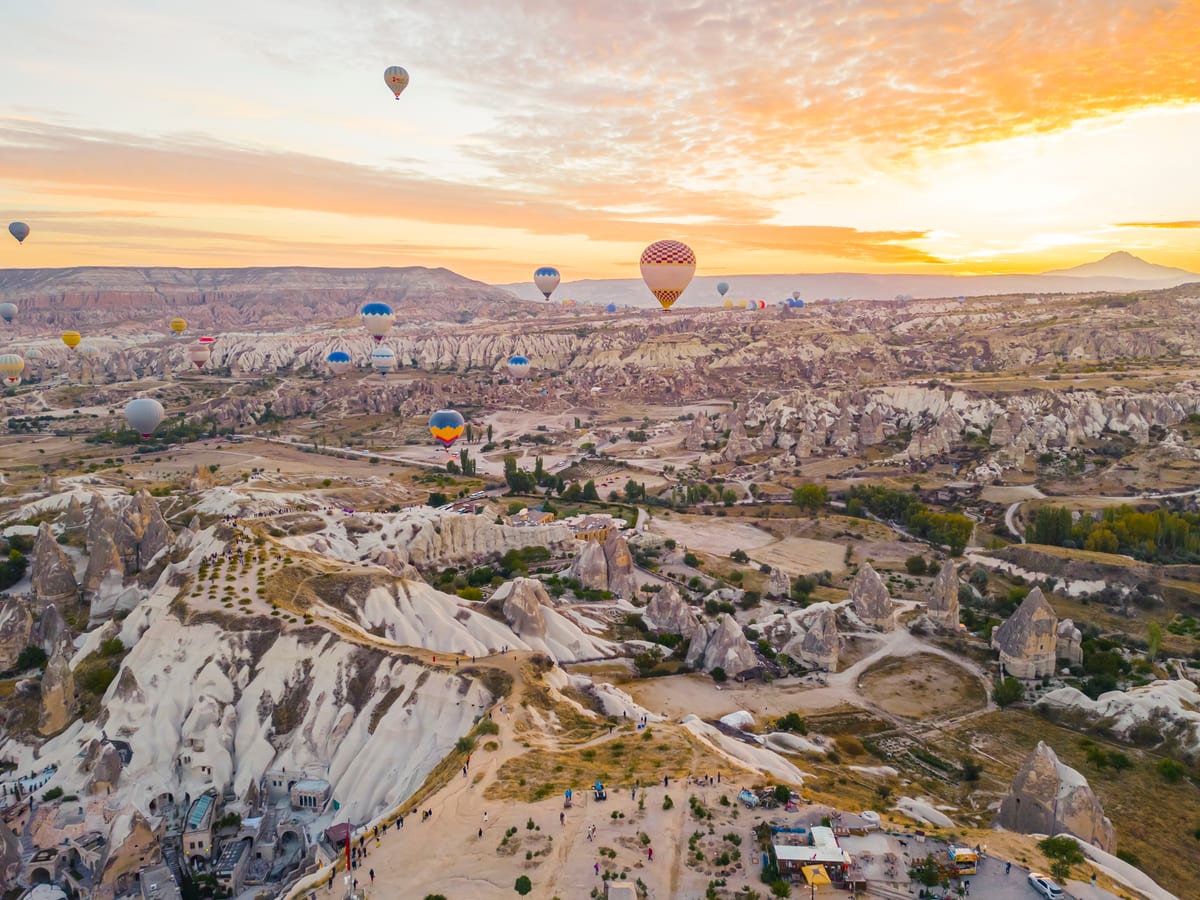
Over 500,000 passengers fly over Cappadocia each year. On a busy summer morning, 150 balloons launch within a 30-minute window from the same area. That sounds chaotic—until you understand the system behind it. Turkey’s civil aviation authority (SHGM) runs one of the strictest balloon regulation frameworks in the world, and it shows in the safety record. This guide covers exactly how the system works, what operators are required to do, and what you should look for when choosing a company.
Who Regulates Balloon Flights in Cappadocia?
The Sivil Havacilik Genel Mudurlugu (SHGM)—Turkey’s Directorate General of Civil Aviation—regulates all commercial balloon operations. Every operator, pilot, balloon, and flight must meet SHGM standards. This is not voluntary. Operating without SHGM approval is illegal, and the agency conducts regular inspections.
SHGM oversees four key areas: operator licensing, pilot certification, equipment airworthiness, and daily flight authorization. No balloon lifts off without clearance from SHGM’s local office in Nevsehir.
How Are Pilots Licensed?
A commercial balloon pilot in Turkey must hold a CAA (Civil Aviation Authority) license, which requires:
- Minimum flight hours: At least 100 hours of balloon flight time before applying for a commercial license, with a significant portion logged in Cappadocia’s specific terrain and wind patterns.
- Written and practical exams: Aviation theory, meteorology, navigation, emergency procedures, and a practical flight test administered by SHGM examiners.
- Medical certification: Annual medical checks to confirm fitness for duty.
- Recurrent training: Annual check flights and ongoing training to maintain the license.
Our pilots at Above Cappadocia have 10+ years of flying experience and hold current CAA licenses. They fly this terrain every day, in every season, and know the valley wind patterns by instinct.
What Equipment Standards Apply?
Every balloon operating in Cappadocia must pass regular airworthiness inspections. Here is what gets checked:
The Envelope (the Balloon Itself)
- Fabric integrity test: inspected for tears, wear, and UV degradation
- Maximum flight hours per envelope before mandatory replacement (typically 400–500 hours depending on manufacturer)
- Annual detailed inspections by manufacturer-approved technicians
The Burner System
- Dual burner system required—if one burner fails, the other maintains flight
- Fuel lines and connections inspected before every flight
- Propane tanks tested for leaks and pressure integrity
The Basket
- Wicker construction with internal steel frame—wicker absorbs landing impact
- Passenger capacity limits enforced per basket certification (Standard: 16–20 pax, Comfort: 12–16 pax, Private: 2–4 pax)
- Handholds and partition walls within the basket for passenger stability
We inspect every balloon daily before flight—envelope, burner, basket, fuel, and all rigging connections. If anything fails inspection, that balloon does not fly.
How Does the Daily Flight Decision Work?
Every morning around 4:00 AM, SHGM’s local meteorological team assesses conditions and issues a fly or no-fly decision. The process looks at:
- Wind speed: Surface winds above 10 knots or upper winds above 20 knots typically ground all flights
- Wind direction: Certain wind patterns push balloons toward restricted areas or terrain hazards
- Visibility: Minimum visibility requirements for safe separation between balloons
- Precipitation: Rain, snow, or thunderstorm activity cancels flights
- Cloud ceiling: Low cloud cover prevents safe altitude management
This is an all-or-nothing decision. When SHGM says no, every operator is grounded—no exceptions. Individual operators cannot choose to fly when SHGM has cancelled. This centralized system prevents rogue operators from taking risks in marginal conditions.
On average, flights operate on about 250–280 days per year. Summer months (June–September) see fewer than 5% cancellation rates. Winter months (December–February) can reach 40–50%. For month-by-month data, see our cancellation rates and weather data guide.
What Happens During the Flight?
Safety does not stop at launch. During the flight:
- Radio communication: Pilots maintain radio contact with the ground crew and other pilots throughout the flight, coordinating altitude and lateral separation
- GPS tracking: Every balloon carries GPS for real-time position monitoring
- Altitude management: Pilots use different wind layers at different altitudes to control direction and maintain safe distances from terrain and other balloons
- Chase crew: A ground vehicle follows each balloon’s flight path to meet it at the landing site
What About Landing?
Landing is the most dynamic phase of the flight. The pilot selects a landing site based on wind direction, terrain, and available space. Passengers are instructed to face the direction of travel, bend their knees, and hold the rope handles inside the basket. Most landings are gentle—the basket touches down and slides forward a few meters on the trailer.
In stronger wind conditions, landings can be firmer. The wicker basket is specifically designed to absorb impact—it flexes rather than shatters. Our chase crew positions the trailer at the landing site so the basket lands directly on it whenever possible.
How Safe Is Ballooning in Cappadocia Compared to Other Locations?
Cappadocia is considered one of the safest commercial ballooning locations in the world, for several structural reasons:
- Stable morning thermals: The volcanic terrain heats and cools predictably, producing calm, consistent morning air currents
- Open terrain: Wide valleys and plateaus provide ample landing options in every wind direction
- Centralized regulation: SHGM’s fly/no-fly system prevents individual operators from making risky decisions
- High flight frequency: Pilots here log more flight hours per year than most commercial balloon pilots in the world, building deep experience with local conditions
- No power lines in flight zones: The flight corridors over the valleys are free of overhead obstacles
No activity is without risk. But the combination of experienced pilots, strict regulation, favorable geography, and conservative weather decisions makes Cappadocia one of the best places to fly. For a broader overview of our safety practices, see our safety page.
What Should You Look for When Choosing an Operator?
Not every operator maintains the same standards above SHGM minimums. Here is what to check:
| Factor | What to ask / check |
|---|---|
| SHGM license | Is the operator licensed? (All legal operators are, but verify.) |
| Pilot experience | How many years and flight hours does the pilot have? |
| Basket capacity | How many passengers per basket? Lower is generally better. |
| Insurance | Does the operator carry passenger liability insurance? |
| Reviews | Check Google, TripAdvisor, and booking platform ratings |
| Cancellation policy | Full refund for weather cancellation? Free rescheduling? |
At Above Cappadocia, we carry full passenger liability insurance, operate three basket sizes (Standard 16–20, Comfort 12–16, Private 2–4), and provide free rescheduling or full refunds for weather cancellations. Our team has completed over 1,000 flights with a 4.9 rating from 125+ reviews. Read our guide to choosing a balloon company.
Common Safety Questions
Can the balloon crash into another balloon?
Balloon-to-balloon contact is extremely rare. Pilots coordinate via radio and use different altitude layers to maintain separation. When balloons do get close, they gently push each other apart—envelopes are flexible, not rigid. A balloon touching another balloon’s envelope is not dangerous; it is simply redirected.
What if the burner fails?
All balloons in Cappadocia carry dual burner systems. If one fails, the pilot switches to the backup and begins a controlled descent to land. The hot air inside the envelope keeps the balloon aloft for several minutes even without additional heat, giving the pilot time to select a safe landing site.
What if the weather changes mid-flight?
Pilots monitor conditions throughout the flight. If wind picks up or visibility drops, the pilot initiates an early landing. The flight may be shorter than planned, but the priority is always a safe landing. SHGM’s pre-dawn weather assessment is specifically designed to catch fronts and wind shifts before they reach the flight zone, but pilots maintain the authority to land early at any time.
Is there a weight limit?
Yes. Each basket has a maximum payload determined by the balloon’s certification. Operators calculate total passenger weight before flight. There is no individual weight limit published, but passengers over 120 kg should inform the operator in advance so basket loading can be planned. For detailed health and accessibility information, see our health and accessibility guide.
Are children allowed?
Most operators set a minimum age of 6 years. Children must be tall enough to see over the basket wall (approximately 1.2 meters). An accompanying adult is always required. For family-specific tips, see our families and kids guide.
What You Can Do for Your Own Safety
- Listen to the pilot briefing. Before launch, the pilot explains the landing position, handholds, and what to do during descent. Pay attention—it takes 2 minutes and matters.
- Wear closed-toe shoes. Sandals and heels are not safe in the basket or at the landing site.
- Hold the handles during landing. Bend your knees, face the direction of travel, grip the rope handles. Do not try to brace yourself against the basket edge.
- Do not lean over the basket wall. Keep your feet inside the basket at all times. Cameras and phones can be replaced—you cannot.
- Inform the operator of health conditions. Heart conditions, recent surgeries, pregnancy, and severe mobility issues should be disclosed at booking, not at the launch site.
- Book with a licensed operator. If a price seems too low, check the company’s SHGM license and reviews. Our 30 questions FAQ covers more common concerns.
Related Articles
What Happens Inside a Hot Air Balloon Basket: The Full Experience
What happens inside a hot air balloon basket in Cappadocia? Minute-by-minute from inflation to landing, sensory details, and insider tips.
Cappadocia Travel Planning Guide: Everything You Need to Know
Cappadocia travel planning guide: flights, hotels, balloon rides from EUR 175, itineraries, budget tips, and seasonal advice for 2026.
Cappadocia Balloon Pilot Training & SHGM Regulations
How Cappadocia balloon pilots are trained and licensed under SHGM regulations: 100+ flight hours, CAA exams, annual checks, and what it means for your safety.
Fly with a Licensed, Insured Operator
Above Cappadocia: CAA-licensed pilots, daily equipment inspections, full passenger insurance. Flights from EUR 175 per person.