Cappadocia Balloon Safety & Regulations: Everything You Need to Know
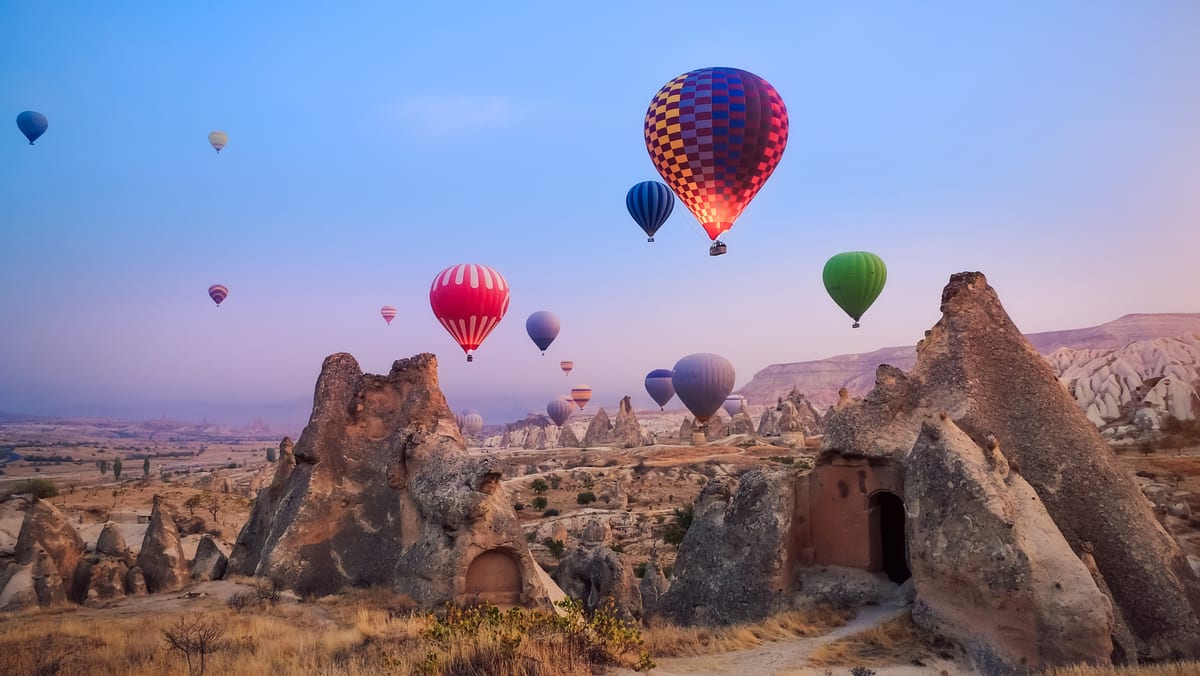
Every morning before the first balloon inflates in Cappadocia, a process happens that most passengers never see. At 3:00 AM, a meteorologist at the SHGM (Sivil Havacilik Genel Mudurlugu—Turkey's Directorate General of Civil Aviation) field station checks wind speed, wind direction at multiple altitudes, visibility, precipitation forecasts, and thermal stability. By 4:00 AM, the decision is made: fly or ground. There is no middle ground, no “let's wait and see.” This single decision affects up to 150 balloons and 3,000 passengers on a peak-season morning.
This level of centralized control is one of the reasons Cappadocia is one of the safest commercial ballooning locations in the world. Here is how the entire safety system works, from the regulations that govern it to the equipment checks that happen before every flight.
Who Regulates Balloon Flights in Cappadocia?
Turkey's Directorate General of Civil Aviation (SHGM/DGCA) is the sole regulatory authority for all commercial balloon operations in the country. The SHGM operates under the Ministry of Transport and Infrastructure and follows International Civil Aviation Organization (ICAO) standards. Its responsibilities in Cappadocia include:
- Licensing balloon operators (Air Operator Certificate)
- Licensing and testing individual pilots
- Setting and enforcing equipment inspection schedules
- Making the daily fly/no-fly decision based on weather
- Investigating any incident or accident
- Setting maximum passenger capacity per balloon
- Defining flight corridors and altitude limits
No balloon can launch in Cappadocia without SHGM approval on that specific morning. This is not a guideline or a recommendation—it is a legal requirement enforced by the civil aviation authority.
Pilot Licensing Requirements
Becoming a licensed commercial balloon pilot in Turkey is a multi-year process. Here are the requirements:
| Requirement | Details |
|---|---|
| Private pilot license (PPL-B) | Minimum 35 hours flight time, written and practical exams |
| Commercial pilot license (CPL-B) | Minimum 100 hours total flight time, additional written exams, check ride with SHGM examiner |
| Medical certificate | Class 2 aviation medical, renewed annually |
| Cappadocia area rating | Specific training flights in the Cappadocia region, demonstrating knowledge of local terrain and wind patterns |
| Proficiency checks | Annual check rides with SHGM-designated examiners |
| English proficiency | ICAO Level 4 minimum (for international radio communication) |
Our pilots at Above Cappadocia hold CPL-B licenses with 10+ years of flying experience in the Cappadocia region. Each pilot completes annual recurrent training and proficiency checks. The SHGM can suspend a pilot's license immediately if a safety violation is documented.
The Daily Weather Decision: How Fly/No-Fly Works
The weather decision process is centralized, precise, and non-negotiable. Here is the timeline:
- 2:00–3:00 AM: The SHGM meteorological team at the Cappadocia station begins analyzing data from weather stations, pilot balloons (small test balloons launched to measure wind at altitude), and national weather service forecasts.
- 3:30–4:00 AM: A pilot balloon (pibal) is launched from the Goreme area. Ground observers track it visually and with instruments to measure wind speed and direction at multiple altitudes (surface, 500 feet, 1,000 feet, 2,000 feet, and above).
- 4:00–4:30 AM: The official decision is communicated to all licensed operators simultaneously. It is either “fly” or “no fly.” There is no partial approval or company-by-company decision.
The thresholds that trigger a no-fly decision:
| Factor | Fly limit |
|---|---|
| Surface wind speed | Below 10 knots (18.5 km/h) |
| Wind at altitude (up to 3,000 ft AGL) | Below 20 knots (37 km/h) |
| Visibility | Minimum 5 km |
| Precipitation | No rain, snow, or active thunderstorms |
| Cloud ceiling | Above 1,500 feet AGL |
| Thermal activity | Stable conditions (early morning provides this naturally) |
Even after a “fly” decision, individual pilots retain the authority to stay grounded if they judge conditions unsafe at their specific launch site. For a deeper look at cancellation rates by month, see our cancellation rates and weather data article.
Equipment Inspections and Maintenance
Every balloon flying in Cappadocia undergoes a strict inspection regime mandated by the SHGM and the balloon manufacturer:
Daily Pre-Flight Checks (Before Every Single Flight)
- Visual inspection of the envelope (the fabric balloon) for tears, wear, or damage
- Burner system test: fuel lines, valves, and igniters checked for leaks and proper function
- Basket integrity: wicker, cables, karabiners, and load frame inspected
- Fuel quantity verification: enough for the planned flight plus mandatory reserve
- Instrument check: altimeter, variometer (rate of climb/descent indicator), thermometer
- Radio communication test with ground crew and SHGM frequency
- Fire extinguisher presence and certification date
Periodic Inspections
| Inspection | Frequency | Performed by |
|---|---|---|
| 100-hour inspection | Every 100 flight hours | Certified balloon engineer |
| Annual inspection | Every 12 months | SHGM-approved maintenance organization |
| Envelope pull test | Per manufacturer schedule | Certified facility |
| Burner overhaul | Per manufacturer schedule | Manufacturer-authorized service center |
The balloon envelope (the fabric part) has a finite lifespan measured in flight hours and calendar age. Most manufacturers certify envelopes for 500–800 flight hours or 8–10 years, whichever comes first. After that, the envelope must be retired and replaced. The SHGM tracks envelope hours for every registered balloon in Turkey.
In-Flight Safety Procedures
Before every launch, the pilot delivers a safety briefing covering:
- Landing position: Feet apart, knees slightly bent, both hands on the rope handles inside the basket. Face the direction of travel.
- Do not lean over the basket edge: Especially during low-altitude passes over valleys and formations.
- Keep limbs inside: Hands and arms inside the basket at all times during landing approach.
- Follow pilot instructions immediately: If the pilot says “down,” everyone crouches. No exceptions.
- No climbing on the basket edge for photos or any other reason.
During the flight, the pilot maintains radio contact with the ground chase crew and monitors wind conditions continuously. If conditions change mid-flight (unexpected wind shift, cloud buildup), the pilot can initiate an early landing. Cappadocia's terrain offers hundreds of flat, clear landing areas across the valleys, making emergency and precautionary landings straightforward.
Insurance Requirements
Every licensed balloon operator in Cappadocia is required by the SHGM to carry passenger liability insurance. This is a condition of the Air Operator Certificate and is verified during annual license renewals. The insurance covers:
- Passenger injury or death during the flight (from boarding to disembarkation)
- Third-party liability (damage to property on the ground)
- Hull insurance for the balloon itself
We strongly recommend that travelers also carry their own travel insurance that covers adventure activities. Most standard travel insurance policies cover hot air balloon flights, but check your policy's “adventure sports” or “aviation activities” clause before your trip. For more on what to check before booking, see our how to book guide.
Accident and Incident Statistics
Transparency matters here. Cappadocia has operated commercial balloon flights since the early 1990s. Over 30+ years and millions of passenger flights, the safety record is strong but not perfect. Here is what the data shows:
- The vast majority of incidents are classified as “hard landings”—landings where the basket contacts the ground with more force than normal, occasionally resulting in minor injuries like sprains or bruises.
- Serious accidents are extremely rare. When they have occurred, SHGM investigations have led to immediate regulatory changes: stricter wind limits, revised pilot training requirements, and enhanced equipment inspection protocols.
- The SHGM's centralized weather decision system, introduced and tightened over the years, has significantly reduced weather-related incidents.
- Turkey's balloon accident rate per flight hour compares favorably with other major ballooning destinations worldwide.
We do not claim that balloon flights are risk-free. No aviation activity is. What we can say is that Cappadocia's regulatory framework is among the strictest in the world for commercial ballooning, and it continues to evolve based on data and incident analysis.
How to Identify a Safe Operator
Not every company in Cappadocia maintains the same standards above the legal minimum. Here are the markers of a safety-conscious operator:
- Valid Air Operator Certificate: Ask to see it. Every licensed operator must display this.
- Named, identifiable pilots: You should know who is flying you. Ask about their experience and license status.
- Pre-flight safety briefing: A proper briefing before every flight, not just “hold on tight.”
- Transparent capacity: The operator tells you basket capacity before you book. If the basket is rated for 16 passengers and they load 20, that is a violation.
- Insurance documentation: Willing to provide proof of passenger liability insurance on request.
- Weather cancellation policy: Operators who cancel in marginal weather are prioritizing safety. Those who push the limits are cutting corners.
- Reviews mentioning safety: Check Google and TripAdvisor reviews for mentions of safety briefings, pilot professionalism, and equipment condition.
For a broader comparison of what to look for, read our guide to choosing the best balloon company.
Flight Corridors and Airspace Management
Cappadocia's balloon flights operate in a designated airspace zone managed by the SHGM. On a peak-season morning, up to 150 balloons may be airborne simultaneously. This requires coordination:
- Staggered launches: Balloons launch from multiple designated sites across the Goreme area at slightly different times, spreading traffic across the sky.
- Altitude separation: Pilots maintain visual separation and use radio communication to avoid other balloons. The general principle is see-and-avoid, supplemented by radio calls.
- No-fly zones: Certain areas (near airports, military installations, and specific terrain hazards) are off-limits.
- Maximum altitude: Balloon flights are typically limited to approximately 6,000 feet AGL, though most flights operate between 500 and 2,000 feet for the best views.
What Happens If Something Goes Wrong Mid-Flight?
Balloon pilots train for multiple emergency scenarios:
- Burner failure: All commercial balloons in Cappadocia carry dual independent burner systems. If one fails, the other provides full control. The pilot can maintain altitude and execute a normal landing on a single burner.
- Rapid deflation: The parachute valve at the top of the envelope is designed for controlled deflation during landing. In the extremely unlikely event of a large tear, the balloon descends gradually, not instantly—the envelope still traps a large volume of hot air.
- Unexpected wind change: The pilot descends to a lower altitude where winds may differ, or initiates an immediate landing. Cappadocia's open terrain provides ample landing options.
- Passenger medical emergency: The pilot radios the ground crew, who call emergency services and guide them to the projected landing area. The pilot prioritizes a quick, controlled landing.
How Above Cappadocia Exceeds the Minimum Standards
We follow every SHGM regulation as a baseline. Beyond that, we maintain additional standards:
- Our pilots average 10+ years of Cappadocia-specific flying experience
- We inspect balloons daily even on days when flights are cancelled (to catch issues during idle periods)
- Our baskets are never loaded beyond 90% of rated capacity, giving passengers more space and an additional safety margin
- We carry additional fuel reserve beyond the SHGM minimum
- Every crew member is first-aid trained, not just the pilot
- We maintain a voluntary incident reporting system for near-misses and passenger feedback
For more about our team and approach, visit our about page or read what our passengers say.
Frequently Asked Safety Questions
Are Cappadocia balloon rides safe?
Cappadocia is one of the safest commercial ballooning locations in the world, backed by SHGM regulation, mandatory pilot licensing, daily weather assessments, and rigorous equipment inspections. No aviation activity is risk-free, but the regulatory framework here is among the strictest globally.
What if the weather turns bad during the flight?
The pilot will initiate an early landing. Cappadocia's terrain is ideal for this—flat, open fields are everywhere. The SHGM weather briefing includes forecasts for the full flight window, so sudden deterioration is rare but planned for.
Can the balloon catch fire?
The balloon envelope is made from rip-stop nylon treated with fire-resistant coatings. The burner flame is directed upward into the envelope opening and does not contact the fabric. Fire extinguishers are carried on every flight. Envelope fires are extraordinarily rare in modern ballooning.
Do I need to sign a waiver?
Yes. All passengers sign a standard flight waiver before boarding. This is normal practice worldwide for aviation activities and does not waive the operator's legal liability for negligence.
Have more questions? See our 30 most common balloon questions, our safety page, or our accessibility and health requirements guide. For weather-specific concerns, read our weather forecast and fly probability guide.
Related Articles
Cappadocia Balloon Proposal Planning: The Complete Guide
Plan a Cappadocia balloon proposal: Private flight packages from EUR 500, photographer, ring safety, decoration, timing tips. Step-by-step guide.

Cappadocia Travel Guide for First-Time Visitors: Everything You Need
Cappadocia travel guide for first-time visitors: how to get there, where to stay, balloon flights from EUR 175, food, culture, and day-by-day planning tips.
Best Time to Visit Cappadocia for a Balloon Ride: The Complete Month-by-Month Guide
Best time to visit Cappadocia for a balloon ride, month by month. Weather data, cancellation rates, crowd levels, and seasonal comparison for all 12 months.
Fly With a Team That Puts Safety First
Licensed pilots with 10+ years experience. Daily equipment inspections. SHGM-certified operations. Sunrise flights from EUR 175 per person with hotel pick-up, breakfast, and champagne toast included.
Book Your Balloon Flight